Complete Guide to OFAC Regulations for U.S. Travelers to Cuba in 2026
What Categories Are Allowed and What Requirements You Must Meet
📌 Introduction
Traveling to Cuba from the United States is not treated like ordinary international travel. Because of longstanding U.S. economic sanctions against Cuba, travel by U.S. citizens and residents must comply with rules set by the Office of Foreign Assets Control (OFAC) under the Cuban Assets Control Regulations (CACR).
This guide explains:
-
Which travel is permitted by U.S. law
-
The 12 authorized OFAC travel categories
-
Important compliance tips and documentation requirements
Understanding these regulations helps U.S. travelers plan legally compliant trips — whether for educational purposes, family visits, humanitarian work, or other authorized activities.
🏛️ Why You Can’t Travel to Cuba as a Typical Tourist (Under OFAC Law)
Under current OFAC regulations, tourist travel from the U.S. to Cuba is not permitted. This means you cannot legally travel to Cuba solely for sightseeing or leisure like you might to Mexico or the Dominican Republic.
To travel legally, your trip must fall under one of the authorized travel categories in the CACR. The good news is that most U.S. travelers can still visit Cuba without applying for a specific OFAC license, as long as their trip qualifies under a general license and they can document their travel reason if asked.
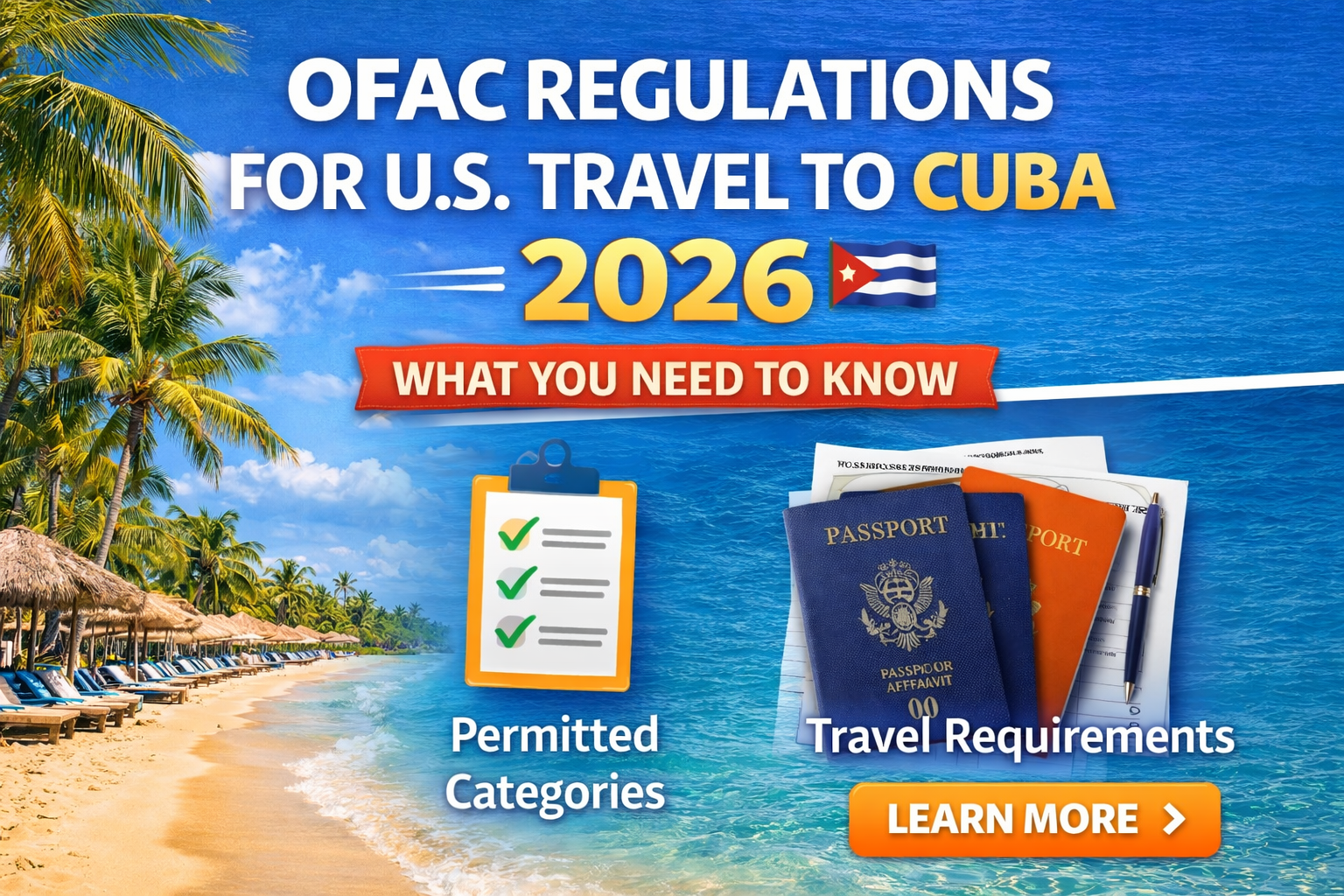
📋 The 12 OFAC Authorized Travel Categories
Here are the 12 categories under which U.S. travelers are allowed to visit Cuba:
-
Family Visits
Visit close family members who are Cuban nationals or residents under defined criteria. -
Official Government Business
Travel on official business for the U.S. government, foreign governments, or qualifying intergovernmental organizations. -
Journalistic Activities
Professional reporting or related journalistic work in Cuba. -
Professional Research and Meetings
Research projects or attendance at professional meetings and conferences. -
Educational Activities
Structured educational programs and activities. -
Religious Activities
Travel related to religious purposes or events. -
Public Performances, Clinics, Workshops, and Competitions
Events such as public exhibitions, athletic competitions, or cultural performances. -
Support for the Cuban People
Independent activities that support Cuba’s civil society and people (e.g., meeting locals, volunteering with community groups). -
Humanitarian Projects
Official humanitarian efforts or relief activities. -
Activities of Private Foundations or Research/Educational Institutes
Projects by qualifying organizations that can include a series of structured interactions. -
Exportation, Importation, or Transmission of Information or Informational Materials
Activities such as exchanging or disseminating information materials. -
Certain Authorized Export Transactions
Business-related export transactions permitted under OFAC rules.
✍️ How to Use a General License (Self-Certify Travel)
🚨 No Prior Application Needed
If your travel purpose clearly fits one of the 12 categories above, you are typically authorized under a general license and do not need to apply for a specific OFAC license before your trip. You simply self-certify that your travel falls within an authorized category.
Airlines or travel service providers might require you to complete a travel affidavit or declaration confirming your travel category before departure.
🧾 Record-Keeping and Documentation
Even though you don’t need prior approval, OFAC requires that you keep records supporting your travel purpose. These records could include:
-
Trip itinerary or event registrations
-
Receipts related to authorized activities
-
Written descriptions of your itinerary or meetings
-
Contact information for organizations you visited or worked with
You should retain records for at least five years in case of review by authorities.
📌 Important Things to Know Before You Go
❌ Tourist Travel Is Still Prohibited
Travel to Cuba that is primarily for tourism does not qualify under the authorized categories and therefore remains prohibited under OFAC regulations.
✅ Most Travelers Use “Support for the Cuban People”
For independent travel (e.g., staying in private homes, dining at local restaurants, interacting with Cuban entrepreneurs), many U.S. travelers choose the Support for the Cuban People category, which allows wide-ranging personal engagement activities.
🇺🇸 Travel Documentation
When traveling from the U.S., be prepared to:
-
Complete airline-required travel affidavits
-
Show proof of your purpose for travel if asked
-
Provide documentation upon re-entry if requested
Failure to follow the documentation requirements could result in fines or enforcement actions by OFAC
🧳 Final Notes
Understanding OFAC’s Cuba travel categories is essential if you’re planning a U.S. citizen or resident trip to Cuba in 2026. While tourism is not permitted, there are multiple legitimate and legal purposes for travel that can allow you to visit this fascinating country — as long as you comply with U.S. regulations.
If you’re planning your trip, make sure your travel purpose clearly fits one of the authorized categories, keep your supporting records, and complete all required travel affidavits before departure.
https://youtu.be/WXFsTr_EwEA?si=m1Ky_DE83GVW9mix